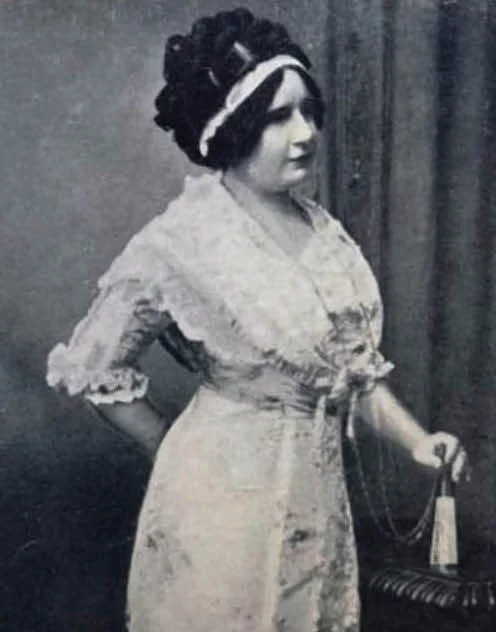
Serafina Dávalos
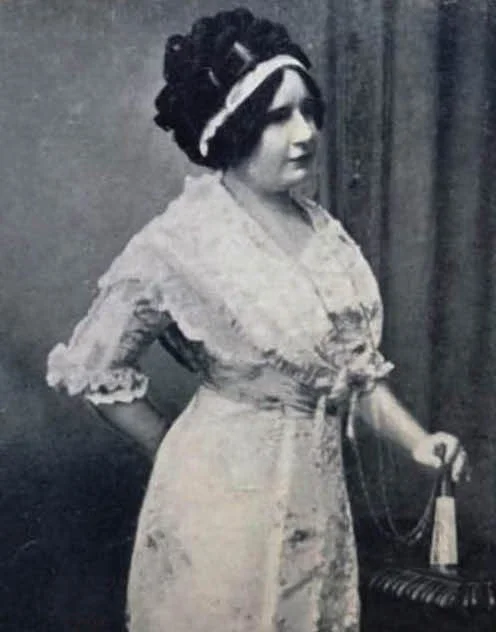
Serafina Dávalos
Despite being one of the most pioneering feminist thinkers, educators, and legal figures to emerge from Latin America during the early twentieth century, Serafina Dávalos nevertheless remains relatively unknown outside her home country of Paraguay, and was in fact almost entirely forgotten to history. As the first Paraguayan woman to earn a law degree and a doctorate in law, Dávalos audaciously entered into an intellectual and professional world that had previously been almost entirely closed off to women. Her groundbreaking 1907 thesis, Humanismo, condemned women’s economic dependence, challenged the legal inequality embedded within marriage, defended women’s right to education and professional work, rejected motherhood as women’s sole natural purpose, and argued that genuine democracy required women’s political participation. Dávalos’ resistance to social convention also extended beyond just writing down and publishing her ideas, as she also built for herself an autonomous professional life. She never married, and she instead maintained an intimate and highly visible companionship with Honoria Ballirán, who would posthumously be recognized and remembered as her “inseparable companion.” Although the precise nature of the two women’s relationship cannot be conclusively established from surviving records, Paraguayan lesbian activists have since reclaimed Dávalos as an important queer foremother, whose personal life in practice reflected the same refusal of prescribed female roles that also animated her work. Dávalos was thus not merely the “first” woman to accomplish a series of remarkable feats, but she also helped develop in her home country a coherent vision of women as full human beings, ones who were entitled to shape their own intellectual, professional, political, and intimate lives.
Serafina Dávalos was born on September 9th, 1877, in Ajos, now known as Coronel Oviedo, in Paraguay to a merchant father named Gaspar Dávalos and a mother named Teresa Alfonzo. Older biographies frequently gave her birth year as 1883, but later research by her great-niece Rosemary Dávalos uncovered her birth certificate and established that she had been born six years earlier. Having been born in 1877, she thus belonged to the generation raised during Paraguay’s difficult reconstruction following the devastating War of the Triple Alliance, which had ended in 1870. Women during this time period in particular played indispensable roles in restoring the country’s households, agriculture, trade, and local economy, and as a result of the war, many families were even headed by women. Despite this, the nationalist mythology that developed around Paraguayan women’s sacrifices at the time generally celebrated them as selfless mothers, widows, residentas, and preservers of the Paraguayan nation rather than as autonomous citizens entitled to political authority. Women’s public labor would often be praised as patriotic, while their legal and political subordination remained largely unquestioned. Raised in this environment of inequity, Dávalos would eventually emerge to expose the contradiction at the center of this arrangement: the Paraguayan nation depended upon women’s work and sacrifice, but still denied them the freedom, education, and citizenship necessary to determine their own lives.
After her family relocated to Asunción, Dávalos pursued an education even though advanced study remained unusual for Paraguayan girls. Between 1894 and 1895, she attended a course for prospective teachers led by the celebrated educators Adela and Celsa Speratti. In 1896, she joined other students in petitioning the government to establish a permanent teachers’ training school for women; she subsequently graduated as part of its first class in 1898. Dávalos then continued into secondary education at the Colegio Nacional de Segunda Enseñanza, today known as the Colegio Nacional de la Capital, graduating in 1901. The following year, she became the first woman to teach Ethics and Morals at the traditionally male institution, and also began studying at the Faculty of Law of the Universidad Nacional de Asunción. Her progression from teacher training to secondary school, university education, and professional instruction was extraordinary for the time period, not only because she continued to enter spaces that were largely dominated by men, but because with each stage she entered, she subsequently expanded the path available to the women who followed her.
While she was still a law student, Dávalos was also already publicly developing her feminist ideas. Between 1900 and 1903, she published articles in the newspaper La Democracia, and in August of 1903 she delivered a lecture simply titled “El Feminismo.” The recently recovered lecture text reveals that the basic principles of her Humanismo thesis were already taking shape at this time: ignorance, she argued in it, was one of the strongest chains through which tyranny maintained human subordination, making education fundamental to women’s liberation. That same year, Dávalos announced that she was concurrently working to establish a commercial school for girls because she wanted to do whatever her abilities permitted to improve both society and the circumstances of her “sisters.” Her plans for the school materialized in 1904 with the opening of the Colegio Mercantil de Niñas, an institution she directed until its eventual merger with another commercial school in 1921. The school notably moved beyond the ornamental and domestic instruction typically offered to women at the time, training some of Paraguay’s earliest female accountants, commercial specialists, stenographers, and secretaries for paid employment.
The school also provides the earliest firm evidence connecting Dávalos to Honoria Ballirán, whose surname is sometimes rendered Balirán. In a university lecture commemorating Dávalos in 1959, Ignacio Amado Berino identified Honoria as Dávalos’ “inseparable companion” and credited the two women with founding the commercial school together. Honoria’s role in helping found the school thus suggests that her partnership with Dávalos extended beyond just private companionship into a shared educational mission. And by creating a school through which women could enter commercial life, Dávalos and Honoria were not just offering charity or personal improvement, but in fact were quietly challenging a social system that used financial dependence to confine women to marriage and the home. Their institution put into practice a central principle of Humanismo: women could not achieve genuine freedom while denied the professional preparation and economic independence necessary to support themselves.
On her own, Serafina Dávalos also participated actively in Asunción’s emerging intellectual culture. She joined the literary and political circle known as La Colmena, whose members included prominent journalists, writers, lawyers, and public officials. In an October 1907 newspaper article, the Spanish-born writer and social critic Rafael Barrett remarked that every hive required a queen and declared that this position belonged “by indisputable right” to Serafina Dávalos. Though Barrett’s description was framed playfully, it indicates the unusual authority Dávalos possessed within a circle otherwise composed of men. Her presence there also challenges any image of her as an isolated eccentric working entirely beyond the intellectual life of her country. Dávalos debated, wrote, and socialized among some of Paraguay’s most visible thinkers, even as her gender and ideas distinguished her from nearly all of the rest of them.
Perhaps most notably, on September 17th, 1907, Dávalos defended Humanismo, the thesis through which she became the first woman in Paraguay to earn a doctorate in law and social sciences. The title reflected her belief that feminism was not a narrow struggle intended to replace male dominance with female dominance, but part of a larger humanist transformation in which every person should be able to enjoy equal dignity and freedom. Drawing upon legal theory, positivism, evolutionary thought, and writers such as John Stuart Mill, Dávalos analyzed women’s subordination as a system produced by law, education, economics, culture, and family life, and asserted that it was not the inevitable result of biological difference. She argued that while physical sex might shape an individual, it did not divide men and women into fundamentally different kinds of human beings. What society labeled women’s natural inferiority, she maintained, was instead the manufactured result of denying women opportunities to develop their abilities and then citing the consequences of that denial as proof that those abilities had never existed.
Dávalos began her overall argument by confronting the belief that motherhood constituted the single natural purpose of every woman. Opponents of women’s rights, she observed, praised maternity as a sacred and celestial mission, only to then also use it as justification for excluding women from every other area of life. “Why,” she asked, “should it not also be maintained that the only mission of man is to be a father?” Dávalos paid particular attention to women who never married or became mothers, arguing that a social system built exclusively around wives and maternity effectively denied unmarried women an independent right to exist. To treat a woman merely as an instrument for producing children, she wrote, was to deny her individual value and reduce her from a person to a thing. For the time period, this argument carried a radical implication: that women’s rights did not derive from their usefulness to husbands, children, or the nation, but from their own individual humanity. It also created conceptual space for female lives organized outside heterosexual marriage and motherhood, even though Dávalos did not explicitly write about same-sex relationships in her thesis.
Indeed, marriage, in Dávalos’ analysis, was one of the principal institutions through which women’s legal and economic dependence was maintained. She compared the ideal marriage to a partnership between two autonomous people, but argued that Paraguayan civil law instead granted the husband near-autocratic authority while reducing the wife’s legal identity “to zero.” If two commercial partners remained separate persons, she reasoned, there was no legitimate basis for a marital contract to absorb one person’s freedom into that of another. Dávalos therefore described the existing marriage law as unconstitutional because it violated the principles of liberty and equality upon which Paraguay supposedly rested. More broadly, she argued that families governed through male command and female obedience trained citizens to accept despotism everywhere else. A democratic society, she posited, could not be built from households organized around arbitrary power, since people accustomed to dominating their families would eventually also treat their fellow citizens in the same way.
For Dávalos, economic emancipation was essential to changing that arrangement. She recognized that women were pressured into dependence because men had monopolized education, paid employment, property, and positions of social authority. She thus called for girls to receive serious professional instruction and argued that wives should be capable of supporting their families alongside their husbands, instead of remaining ensnared in a state of permanent legal childhood. Education, within Dávalos’ collective body of work, was therefore not merely an abstract cultural good, as it enabled women to survive without accepting an unwanted marriage, to negotiate family relationships from a position of greater equality, and to participate meaningfully within public life. The foundation of the Colegio Mercantil de Niñas gave practical form to this philosophy, creating an institution through which women could pursue the economic independence Dávalos advocated for in her writing.
Dávalos applied the same reasoning to political rights. She supported universal suffrage and argued that representative democracy could not genuinely express the will of the people while simultaneously excluding women. Limited voting systems, she warned, produced oligarchy beneath the appearance of democratic government. And if many women seemed uninterested in politics, she argued, the problem was not a natural incapacity but a system that had refused to educate them for citizenship and ridiculed those who nevertheless expressed political opinions. Dávalos thus concluded that the vote should be exercised by all men and women who satisfied the same constitutional requirements. Her arguments, however, appeared more than half a century before Paraguay would finally recognize women’s equal political rights in 1961, making the exclusion especially poignant: Dávalos spent her career articulating the democratic necessity of female citizenship but died four years before she herself could legally cast a ballot.
After earning her degree, Dávalos practiced law and in 1908 was appointed to Paraguay’s National Council of Education, where she participated in discussions that contributed to reforms in primary education. Additional historical claims add that she then became a member or minister of the Superior Tribunal of Justice, the predecessor of Paraguay’s Supreme Court. More recent archival investigation, however, found no appointment decree, judicial opinion bearing her signature, institutional listing, or other primary evidence proving that she indeed served on the court. The probable source of the confusion was Dávalos’ own 1910 account of a campaign by several male lawyers—including the influential Cecilio Báez—to have her appointed to the position. She explained that Báez wished to see her on the tribunal but also noted that the position formally required citizenship, a status whose full political meaning remained denied to women at the time. Dávalos therefore appears to have been seriously proposed for the court without ever actually being able to join it, and this particular story surrounding the position only further exposed the legal contradiction of a country willing to recognize her qualifications while withholding the citizenship necessary for her appointment.
In 1910, Dávalos traveled to Buenos Aires as the Paraguayan government’s official delegate to the First International Women’s Congress of the Argentine Republic. She served as vice president of its Law Commission and delivered the closing address, placing Paraguay’s emerging feminist movement within a wider regional conversation about education, professional equality, marriage reform, and suffrage. Six years later, she again represented Paraguay at the First American Congress of the Child in Montevideo. Meanwhile, back home, she continued advising and participating in organized campaigns for women’s civil and political rights. In 1919, she joined Virginia Corvalán, Felicidad González, Carmen Garcete, and numerous others in promoting a formal feminist movement, and she continued to remain associated with later organizations including the Unión Femenina del Paraguay in 1936 and the Liga Paraguaya Pro Derechos de la Mujer during the 1950s. These groups were each part of an international network through which Paraguayan women exchanged ideas with feminists and suffragists elsewhere in the Americas, further demonstrating that Dávalos’ work was never just confined to solitary intellectual protest.
Still, the most personally transgressive aspect of Dávalos’s life may have been her enduring association with Honoria. Dávalos never married, and while remaining unmarried is not, by itself, evidence of lesbian identity, significant evidence persistently remembers the two women as being together. Berino’s 1959 lecture identified Honoria as Dávalos’s “inseparable companion,” while oral recollections gathered by feminist scholar Line Bareiro after the rediscovery of Humanismo in 1986 again described Honoria as her “inseparable friend” and recalled that people had even said that Dávalos was, in fact, a lesbian. Collectively, these secondhand statements and lectures do not confirm whether the two women themselves used romantic language privately, how they understood their bond, or whether their relationship remained constant throughout their lives, and no known diaries, love letters, or direct testimony from either woman survive to definitively answer those questions. What is known, however, is that Honoria occupied a sufficiently central and visible position in Dávalos’ life, enough to remain part of public memory decades later.
During her later years, Dávalos gradually withdrew from public life while continuing to offer legal and intellectual support to the women campaigning for political rights. The precise circumstances of her final years remain unclear, but family memories collected during the 1980s described her battling a long illness, increasing isolation, and advanced diabetes, while close relatives reportedly lost contact with her for an extended period before her death. Dávalos ultimately passed away on September 27th, 1957. Berino’s 1959 memorial stated that she had been denied even simple Christian funeral rites because of her adherence to the positivist philosophy of Auguste Comte, and her burial place has never been securely identified. Perhaps most tragically of all, though, is that Dávalos died before the movement to which she had so significantly contributed achieved its central political demand: Paraguay’s Law 704, granting equal political rights to women, was not enacted until four years later, in July of 1961.
Shortly after her death, Dávalos’ name and work largely disappeared from Paraguayan public memory—even the Faculty of Law failed to preserve a readily accessible copy of Humanismo. Then in November 1986, Rosita Palazón discovered one of the few surviving copies of it while going through her mother’s library and brought it to the feminist political scientist Line Bareiro. Bareiro later recalled her astonishment at encountering a Paraguayan woman who had so clearly analyzed male domination in 1907, and the discovery prompted her to gather memories from people who had known Dávalos or heard stories about her. The Centro de Documentación y Estudios then published a recovered edition of Humanismo in 1990 and issued a second edition for the work’s centenary in 2007. For the resurgent Paraguayan feminist movement of the 1980s, the book helped establish a connection to intellectual and political roots that the country’s official histories had almost entirely erased.
That initial step towards recovery has since continued through a variety of scholarship, publishing, art, public history, and queer activism. David Velázquez Seiferheld’s 2017 collection A la mujer paraguaya, for example, assembled Dávalos’ early newspaper articles and her 1910 congress speech, while Rosemary Dávalos’ 2025 volume paired the newly discovered 1903 lecture “El Feminismo” with Humanismo, allowing readers to trace the development of Serafina’s thoughts over the years. Meanwhile, a principal auditorium in Paraguay’s Palace of Justice was named for Dávalos in 2020, while her former home in Asunción was declared a site of cultural heritage in 2021, with renewed efforts now underway to help restore it. More recently, in 2026, the Universidad Nacional de Itapúa inaugurated a free academic program named for Dávalos devoted to feminist studies, gender equality, sexual diversity, and human rights. That same year, her portrait entered the Gallery of Heroines and Heroes of the Americas at the headquarters of the Organization of American States. Collectively, these honors have begun to rightfully return Dávalos to the institutional spaces—universities, courts, and civic bodies—from which women were so largely excluded during her lifetime.
Ultimately, Serafina Dávalos’ historical significance thus extends well beyond the distinction of just becoming Paraguay’s “first woman lawyer.” From the outset of her career, she understood women’s subordination as an interconnected system: restricted access to education fostered economic dependence; dependence trapped women in unequal marriages; patriarchal households normalized authoritarian power; and political exclusion denied women the means to reform the laws that sustained these conditions. Her vision of emancipation was therefore equally comprehensive, encompassing professional training, control over one’s earnings, full legal personhood within marriage, access to public service, and an equal voice in democratic life. More than fifty years before Paraguayan women secured the vote, Dávalos recognized that admitting a few exceptional women into male institutions would accomplish little unless the social order itself changed. Her place in LGBTQ+ history also rests on a similarly expansive understanding of freedom. Although she left no known statement identifying herself as a lesbian outright, Honoria Ballirán was nevertheless identified and remembered as her inseparable companion and collaborator, and later generations of Paraguayan lesbians found in their visible partnership a history that conventional archives had failed to preserve. Regardless, Dávalos herself rejected the idea that women existed only to become wives and mothers and instead built a life in which intellectual ambition, public authority, female companionship, and personal autonomy could coexist. Her later obscurity, like the subordination she opposed, was historically produced—and her recovery has been made possible by feminists and queer people alike, mutually determined to challenge that erasure.
REFERENCES AND FURTHER READING
Disclaimer: some of the sources may contain triggering material
ABC Color. (2021, July 23). El romance de Serafina Dávalos, punto de partida para contar la historia del lesbianismo en Paraguay. https://www.abc.com.py/nacionales/2021/07/23/el-romance-de-serafina-davalos-punto-de-partida-para-contar-la-historia-del-lesbianismo-en-paraguay/
Bareiro, L. (2007). Atando cabos. In S. Dávalos, Humanismo (2nd ed., pp. 11–15). Centro de Documentación y Estudios.
Berino, I. A. (2007). Doctora Serafina Dávalos, la precursora del feminismo en el Paraguay. In S. Dávalos, Humanismo (2nd ed., pp. 102–107). Centro de Documentación y Estudios.
Carbone, R. (2021). Serafina Dávalos: Feminismo y educación. Bordes, 18, 73–84. https://repositoriosdigitales.sicyt.gob.ar/vufind/Record/RIUNGS_74bea01b7dfa99fcf408b14af52dfaf0
Cerna Villagra, S. P. (2015). De residentas a presidentas: La procelosa participación de la mujer paraguaya en la política y la emergencia del movimiento político feminista Kuña Pyrenda. Ciencia Política, 10(20), 219–241. https://doi.org/10.15446/cp.v10n20.53898
Dalla Corte Caballero, G. (2018). Mujeres, sociedad y economía de la República del Paraguay. Anuario de la Escuela de Historia, 30, 194–216. https://doi.org/10.35305/aeh.v0i30.257
Dávalos, R. (2025). Serafina Dávalos: De la conferencia El feminismo (1903) a la tesis Humanismo (1907). Arandurã.
Dávalos, S. (2007). Humanismo (2nd ed.). Centro de Documentación y Estudios. https://www.cde.org.py/imd/nim/wp-content/uploads/1990/12/CDE-2007-Davalos-Serafina-Humanismo.pdf
La Serafina, Espacio Cultural Feminista. (2007). Serafina Dávalos: Una historia de transgresiones. In S. Dávalos, Humanismo (2nd ed., pp. 5–6). Centro de Documentación y Estudios.
Makaran, G. (2013). La imagen de la mujer en el discurso nacionalista paraguayo. Latinoamérica. Revista de Estudios Latinoamericanos, 57, 43–75. https://doi.org/10.1016/S1665-8574(13)71711-3
Pasmor Flores, R. A. (2024, October 13). ¿Serafina Dávalos fue ministra del Superior Tribunal de Justicia? La Nación. https://www.lanacion.com.py/gran-diario-domingo/2024/10/13/serafina-davalos-fue-ministra-del-superior-tribunal-de-justicia/
Poder Judicial de la República del Paraguay. (2020, October 30). Salón Auditorio del Palacio de Justicia es denominado “Dra. Serafina Dávalos.” https://www.pj.gov.py/notas/19353-salon-auditorio-del-palacio-de-justicia-es-denominado-dra-serafina-davalos
Ribeiro, J. S. L., & de Souza, J. H. A. (2022). Serafina Dávalos: Lutas, logros e silenciamento. Boletim de Conjuntura, 10(30), 113–122. https://doi.org/10.5281/zenodo.6551030
Secretaría Nacional de Cultura. (2021, March 18). La SNC declaró bien de valor patrimonial la casa de Serafina Dávalos. https://cultura.gov.py/2021/03/la-snc-declaro-bien-de-valor-patrimonial-la-casa-de-serafina-davalos/
Soler, L. (2019). Mujeres y redes internacionales: La Liga Paraguaya Pro Derechos de la Mujer (1951–1962) como parte de las disputas de la Guerra Fría. Descentrada, 3(1), e073. https://doi.org/10.24215/25457284e073
Universidad Nacional de Itapúa. (2026, August 19). Apertura de la Cátedra Libre “Serafina Dávalos: Estudios Feministas para la Igualdad de Género.” https://uni.edu.py/apertura-de-la-catedra-libre-serafina-davalos-estudios-feministas-para-la-igualdad-de-genero/
Velázquez Seiferheld, D. (Ed.). (2017). A la mujer paraguaya: Un recorrido por las ideas de Serafina Dávalos (1900–1910). Tiempo de Historia. https://www.portalguarani.com/3549_david_velazquez_seiferheld/41454_a_la_mujer_paraguaya_un_recorrido_por_las_ideas_de_serafina_davalos_1900_1910__compilador_david_velazquez_seiferheld__ano_2017.html
Velázquez Seiferheld, D. (2026, September 6). Setiembre, el mes de Serafina Dávalos. La Nación. https://www.lanacion.com.py/gran-diario-domingo/2026/09/06/setiembre-el-mes-de-serafina-davalos/