
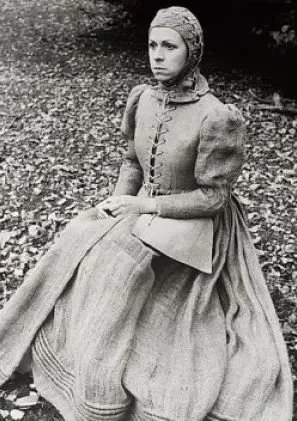
Herculine Barbin
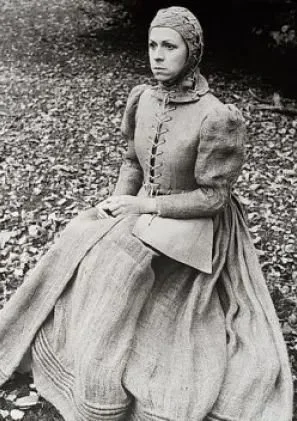
“You are to be pitied more than I, perhaps. I soar above all your innumerable miseries, partaking of the nature of the angels; for, as you have said, my place is not in your narrow sphere. You have the earth, I have boundless space…”
– Herculine Barbin
Herculine Barbin’s life is often introduced as a “case” — a nineteenth-century medico-legal puzzle that forced doctors and judges to decide what, exactly, made a person male or female. Born in 1838 in France and raised as a girl within Catholic schools and convents, Barbin would soon become the subject of medical examinations, legal judgments, and public scandals aimed at determining her “true sex.” The historical significance of her life, however, is not just tied to the ambiguity of her physical body but also to the extraordinary paper trail she managed to leave behind. Indeed, much of what we know about Barbin comes from her autobiographical memoir, written near the end of her life and after her legal sex reclassification–a groundbreaking text shaped by both hindsight and a need to justify a life that had been made publicly scandalous. This written work survived alongside a dense archive of medical, legal, and journalistic records, offering a rare first-person account of how sex was defined, enforced, and punished in the nineteenth century. Collectively, these materials reveal how Barbin’s personal experience was subordinated to institutional authority, as well as how the modern demand for a single, fixed sex could transform an individual’s life into a problem that needed to be corrected.
Barbin’s story begins in the Catholic schools and convents where she spent her childhood and adolescence being raised as a girl. Born Herculine Adélaïde Barbin on November 8th, 1838, into a poor family in Saint-Jean-d’Angély, France, her access to education depended on charitable support. The support, in the form of a scholarship, then placed her within girls’ religious institutions. These environments gave Barbin access to literacy, structure, and a sense of social belonging, but they also governed with religious discipline, strict expectations around gender, and constant observation around intimacy. All of this would later shape how Barbin’s body and interpersonal relationships were understood.
Nevertheless, within these schools and convent spaces, Barbin formed intense attachments to other girls and women. Her memoir’s tone depicting this period of her life is often tender and heightened, shaped by the sentimental idioms of the period and by the emotional intensity of enclosed female communities. In these settings, physical affection could be accepted as long as it was understood as friendship or devotion rather than sexual desire. Kisses, embraces, and intense loyalty were tolerated until they were interpreted as erotic, a line that was not always so fixed and that was enforced informally, through gossip and rumor rather than explicit rules. Barbin’s recollections from this time show that what ultimately mattered was not just her own actions, but how others chose to interpret and name them.
As Barbin moved through adolescence, she became increasingly aware that her body did not conform to the expectations attached to girlhood. Retellings based on her memoir and later medical reports point to various markers that provoked attention in a girls’ school setting: she did not menstruate; her chest remained flat; she developed facial hair; her physique was read as unusually “hard” or “masculine.” These details recurred because nineteenth-century observers used them as evidence, but they were also social facts: they shaped how peers and teachers looked and perceived Barbin, and how Barbin learned to manage her own visibility. In frequently repeated anecdotes, Barbin trimmed facial hair to avoid deriding comments, chose clothing that hid what might be read as inappropriate, and withdrew from situations where physical bodies or body parts would be compared. The work of “passing” in her life was not a modern identity narrative so much as a daily strategy for her remaining unremarkable in a world that demanded sameness.
By her late teens, though, Barbin had earned credentials that allowed her to work as a teacher–an unusual achievement for someone of her class–and one that underlined how much her future depended on institutional approval. Within this professional setting, she entered into her most well-known relationship with a colleague named Sara. The relationship is described across multiple accounts as affectionate, romantic, and eventually sexual. In Barbin’s memoir, its intimacy is narrated through the small, ordinary gestures of daily life, like sharing quotidian routines and using private terms of affection. These details feel tender, but they also reveal how easily moments meant to remain private could be exposed and treated as public proof.
Rumors surrounding their relationship arrived quickly, as kisses and nicknames that might have been dismissed as schoolgirl sentiment became suspicious once they threatened occupational reputation. According to several accounts, Sara’s mother demanded that these public displays be stopped to avoid scandal. The relationship, however, continued in secret, which only intensified the stakes, and while secrecy protected them temporarily, it also marked the relationship as something suspect. According to the moral framework of the time period, love between two women was not just disapproved of; it was treated as a deviation that demanded correction, and Herculine Barbin’s story then turns on the fact that her “correction” came from the medical field.
In truth, Barbin’s shift from leading a private life to public scrutiny is often traced to a subsequent medical visit. During this trying time, she sought care for both physical pain and emotional distres, and a simple appointment led to further examination–first by one physician, then by a sequence of other doctors, and eventually through a formal medico-legal review. The focus quickly pivoted from asking the question “what is wrong?” to querying “what are you?”; from trying to diagnose a problem to attempting to classify her sex. Generated medical reports from this time, later summarized and circulated, recorded anatomical details and assessed which characteristics were considered dominant, as in nineteenth-century medicine, intersex bodies were frequently sorted into hierarchies of authenticity: one sex was presumed real, the other a misleading appearance. The question was thus not how to support Barbin as she was, but how to uncover the sex that nature had supposedly intended her to be.
Religious authorities also got involved at this stage. In several accounts, Barbin–who was deeply devout at the time–confessed her distress to a bishop. That confession became a point of transfer from private disclosure to institutional response. Permission to break Barbin’s confessional secrecy in order to consult physicians enabled more medical examinations to proceed, revealing how religious and medical authorities during this era worked in tandem with one another rather than in isolation. Barbin was thus examined and her body was interpreted by members from both fields, and those interpretations were soon converted into formal decisions that would change her life forever.
The results of these examinations and interpretations then extended beyond the medical and religious fields, as a legal ruling soon followed that required Barbin to change her civil status to male. This watershed moment is often seen as an early example of what Michel Foucault called the modern demand for a “true sex”–the idea that each person must have only one sex, defined not by themselves but by medical and legal authorities. Foucault also presents the case as marking a true historical shift: earlier legal and social systems sometimes tolerated ambiguity, whereas modern systems came to require fixed sex classification backed by documentation. In Barbin’s case, this demand did not resolve her uncertainty; it imposed a compulsory change in her social identity.
And so, Herculine then became Abel. She left her teaching position and separated from Sara. And while these changes are often summarized as a matter of pronouns and clothing, her memoir places a much deeper emphasis on displacement, and on the loss of the environments that had made her life coherent. The institutional world that had structured her life–the girls’ school, with its routines, intimacy, and constraints–was also the only world where her gendered existence had been socially possible. After the legal reclassification occurred, she was required to live publicly as a man, a role that felt unfamiliar and isolating, and one that Barbin continued to try and understand herself through the language and emotional memory of her previous life.
While the courts and physicians enacted and enforced Herculine’s official transformation, the press then reshaped it and disseminated it for public consumption. Newspapers framed the case as a scandal, presenting Barbin as either an aberrant curiosity or an object of moral warning. As author Leslie Jaye observed, once news outlets took up the story, Barbin’s life ceased to be her own and instead became a commodity–a template for moralizing and sensationalism. Even more sympathetic retellings by those who were not Herculine herself often followed a compressed and cruelly efficient sequence: the story of a female-born individual declared male, then forced to live as a man, only to tragically put an end to their life by eventually committing suicide. Barbin’s memoir, however, resisted that compression by documenting the more nuanced and personal aspects of what followed after the ruling–her loss of community, the narrowing of work options made available to her, and the exhaustion of continually being looked at as evidence rather than as a person.
Perhaps in an effort to escape and start over, Barbin then moved to Paris, where she subsequently lived in poverty. She sought employment but was repeatedly rejected as physically unfit for the forms of masculine labor available to her. Her feelings of isolation and loneliness quickly became sustained conditions rather than part of a temporary state and it is at this time when she began to pen her memoir, which opens with a blunt awareness of her sense of nearing death and having no place in the world. Due to her predicament in life at this point, her memoir neither argued a position nor proposed reform, but instead merely recorded her exhaustion, humiliation, detachment, and resentment. Stylistically, it also reads, at times, like a nineteenth-century novel, adopting a tone that is elaborate and emotionally charged–partly a literary habit of the era, partly a method for giving shape to the difficulty of narrating her experience when the dominant language available to her was filled with judgment and condemnation.
In February of 1868, Barbin died by suicide in Paris by asphyxiation from gas in her small abode. Her memoir was found beside her body. Accounts of her death often return to this profoundly affecting scene: an isolated room, a manuscript left behind, and a world that will consume this text without having cared for its author. A quotation frequently attributed to Barbin–“You have the earth, I have boundless space”–began to circulate widely, sometimes presented as her final assertion of transcendence. The memoir itself, however, did not frame her death as a triumph, but instead described her life as one marked by a series of repeated institutional and social cessations.
After Barbin’s death, her memoir was placed under medical custody. In the 1870s, the forensic physician Auguste Ambroise Tardieu published excerpts from it in his medico-legal writings on sex classification. Nearly a century later, Michel Foucault went on to republish the memoir with an introduction and accompanying dossier of medical and legal documents. An English translation of that reproduction brought it to a much wider audience, greatly expanding both its readership and impact. From that point forward, Herculine Barbin became a recurring reference point in debates around the world about sex, gender, and the authority of classification–sometimes cited as clinical evidence, sometimes treated as a symbolic figure.
That reception, however, has also remained contested. Judith Butler, for example, criticized Foucault for romanticizing Barbin’s early life as a “happy limbo,” arguing that her memoir did not depict a pre-disciplinary freedom but rather demonstrated how norms structured and constrained Barbin’s life from the outset. Intersex scholar Morgan Holmes, in turn, emphasized that Barbin’s own writing could be read as affirming herself as female, even if described as exceptional, rather than as identifying outside of sex altogether. Altogether, these differing interpretations have shaped how Barbin has been positioned in contemporary discourse: as an example of institutional violence, as a symbol of non-binary possibility, or as a case of enforced reclassification against personal self-understanding.
Even the narrative of Barbin’s “rediscovery” by the world has been deemed more complex than it is often presented. Some, for example, note that the Ottoman physician Dr. İbrahim Şevki translated and serialized Auguste Ambroise Tardieu’s writings, including Barbin’s memoir, into Ottoman Turkish between 1884 and 1885, decades before Foucault’s edition was released. While this history does not diminish Foucault’s role in the twentieth-century academic circulation of Barbin’s story, it does demonstrate that her case had entered transnational medical networks relatively early on. It also complicates the idea that a single editor or author constituted the origin point of her modern reception.
Lastly, the commemoration of Barbin’s birthday via Intersex Day of Remembrance, which was first observed on November 8, 2005, also reflects her complicated and multilayered afterlife. While her case has been frequently cited as an example of the consequences of systems that treat sex as a fact to be certified rather than a condition to be lived, her story, at the same time, has been repeatedly mobilized for theoretical and political purposes. A careful and responsible reading of her memoir, however, requires attention to both dynamics: the nineteenth-century institutional framework that demanded classification, and the later interpretive frameworks that have reassigned her significance.
Despite all of these nuances and complexities, what cannot be denied in the end is the fact that Herculine Barbin–with improbable foresight–left behind an unusually intimate and rare first-person record of what it felt like to be made administratively impossible and what it meant to be reclassified by medical and legal authority in the early 19th century. Her memoir did not ask to be read as a metaphor or to turn its author into a legend, but it quietly and insistently documented the material consequences of these institutional decisions. It painstakingly showed how a life can be undone–through loss of work, loss of community, loss of status, and the steady contraction of available futures–not only by individual cruelty, but by institutions that insist there is no legitimate place for someone who does not fit their arbitrary categories. Herculine's text also makes clear that her death did not result from her own sense of internal ambiguity alone, but from the societal infrastructures that refused to accommodate it.
To read Barbin today is thus not simply to recover an important and too little-known historical figure; it is also to confront how systems of classification determine whose lives are recognized, supported, and allowed to endure–conditions that remain very much in place around the world to this day. Remembering Barbin, then, is not about claiming her as a symbol, but about refusing the conditions that rendered her life– and the lives of many who have come after her–unlivable.
REFERENCES AND FURTHER READING
Disclaimer: some of the sources may contain triggering material
Artvinli, F. (2021). What if Michel Foucault was Alive or Herculine Barbin is in Istanbul. Archives of Neuropsychiatry. https://doi.org/10.29399/npa.27204
Barbin, A., Foucault, M., McDougall, R., Wilkins, S., & Panizza, O. (2010). Herculine Barbin: Being the Recently Discovered Memoirs of a Nineteenth-century French Hermaphrodite. Vintage Books.
Butler, J. (2011). Gender trouble. Taylor and Francis.
Brown, F. (1980, October 9). The Heroic Hermaphrodite. The New York Review of Books. https://www.nybooks.com/articles/1980/10/09/the-heroic-hermaphrodite/
Foucault, M. (2013). Herculine Barbin. Vintage Books.
Holmes, M. (2004). Locating Third Sexes. Transformations, 4(1), 13. https://doi.org/10.33011/tf.v4i1.4073
Jaye, L. (2016, November 4). Starry, Starry Night: The Short Life of Herculine Barbin. Intersex Day. https://intersexday.org/en/starry-starry-night-herculine-barbin/
Keehnen, O. (n.d.). Herculine Barbin. Legacy Project Chicago. https://legacyprojectchicago.org/person/herculine-barbin
Keogh, S. C. (2024, November 8). The History of Herculine Barbin, Whose Life is Commemorated on Intersex Day of Remembrance. GCN. https://gcn.ie/intersex-day-remembrance-herculine-barbin/
Mak, G. (2013). Doubting Sex: Inscriptions, Bodies and Selves in Nineteenth-century Hermaphrodite Case histories. Manchester University Press.
McLaren, M. A. (2012). Feminism, Foucault, and Embodied Subjectivity. State University of New York Press.
Reimann, M. (2017, March 2). The Tragic Story of the Intersex Person who Puzzled 19th-century France. Medium. https://medium.com/timeline/the-tragic-story-of-the-hermaphrodite-who-puzzled-19th-century-france-702050cdd5b8
Repo, J. (2014). Herculine Barbin and the Omission of Biopolitics from Judith Butler’s Gender Genealogy. Feminist Theory, 15(1), 73–88. https://doi.org/10.1177/1464700113512737
Webb, J. (2008). Herculine Barbin: Human Error, Criminality and the Case of the Monstrous Hermaphrodite. Hosting the Monster, 153–162. https://doi.org/10.1163/9789401206495_010