Dung Hà
“No one ever loved me the way she did.”
– V., former partner of Dung Hà
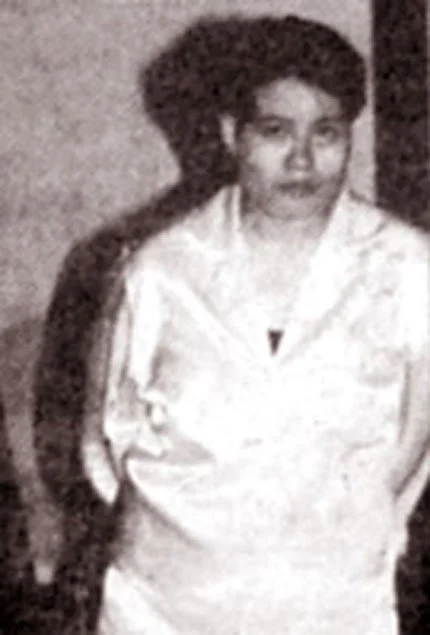
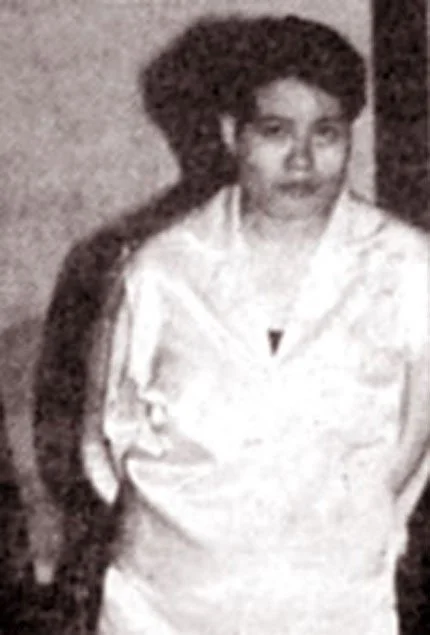
Dung Hà occupies a rare and deeply complicated place within Vietnam’s LGBTQ+ past, remembered both as a feared crime boss and as a murder victim whose death helped unravel one of the largest organized-crime scandals in modern Vietnamese history. Beyond the violence and underworld mythology that came to define her legacy, Dung was also a gender-nonconforming woman who dressed almost exclusively in masculine clothing and maintained highly visible relationships with other women. And despite the fact that homosexuality remained deeply stigmatized and largely underground throughout Vietnam at the time, Dung made little effort to conceal either her masculine presentation or her same-sex relationships. Though she never publicly identified herself using contemporary terms like lesbian, bisexual, transgender, or nonbinary, her open departure from conventional expectations of gender and sexuality made her an unusually visible queer figure in 1990s Vietnam. Ultimately, Dung’s LGBTQ+ significance within history is inseparable from the contradictions of her life: she was neither an activist nor a conventional role model, but a complicated figure whose queerness existed openly within one of the most masculine and unlikely corners of Vietnamese society.
Dung Hà was born Vũ Thị Hoàng Dung in Hải Phòng in 1965, and was raised on Trạng Trình Street in Hải Phòng’s Hồng Bàng district, near the bustling Chợ Sắt market, the Tam Bạc River, and one of the city’s major bus terminals. One account described her family as comfortably middle class, while another identified her as the youngest of several siblings. From childhood, however, Dung reportedly distinguished herself from the other girls around her by wearing her hair closely cropped and by favoring masculine clothing and sandals. Meanwhile, the markets, loading docks, riverfront, and transportation hubs surrounding her home brought together merchants, laborers, travelers, smugglers, and street criminals, and Dung began to drift into pickpocketing and committing small-scale thefts while she was still a young teen. Shortly thereafter, she dropped out of school, and by the time she had reached her early twenties, Dung had already begun to attract attention within Hải Phòng’s giang hồ—the loosely organized world of street gangs, gambling, protection, and criminal prestige.
Dung’s first widely reported romantic relationship was with a local gangster known as Hùng “Chim Chích,” who operated around Chợ Sắt and who had already spent considerable time in prison. Allegedly, Dung used the relationship to gain both protection and credibility within Hải Phòng’s underworld, though the extent to which it was driven by personal attachment or criminal strategy remains unclear. Nevertheless, through Hùng she became more closely connected to the men who controlled street activity around the markets and bus terminals, and she eventually began managing others rather than carrying out thefts herself. Dung’s relationship with Hùng, however, ended when Hùng became increasingly consumed by drugs and lost much of his former authority. Despite their separation, several former associates later recalled that when Hùng died in poverty, Dung arranged and paid for his funeral. The gesture reflected a contradiction that would come to define Dung’s reputation throughout her life: she could be ruthless toward rivals while remaining fiercely loyal and generous toward those she considered deserving of her support, in an underworld where personal obligations and reputation carried considerable weight.
After separating from Hùng “Chim Chích,” Dung then became involved with another far more powerful underworld figure known as Hùng “Cốm.” Their relationship considerably increased Dung’s standing, and the pair came to operate almost as partners within Hải Phòng’s criminal economy. When Hùng was convicted of murder and sentenced to death, Dung reportedly devised an extraordinarily elaborate plan to free him from prison. According to legend, a grenade was to be smuggled to Hùng, who would overpower his guards and escape in a waiting truck while Dung’s associates blocked police vehicles throughout the city. Boats positioned along the coast would then transport him toward Hong Kong. In the end, however, the plan failed and Hùng was eventually executed. Notably, the Hải Phòng police never confirmed that this attempted escape ever took place, and a 2006 investigation by Tuổi Trẻ deemed the story to be purely underworld legend rather than an established fact. Nevertheless, the tale became an important part of Dung’s reputation, portraying her as a capable strategist whose courage, loyalty, and organizational skills rivaled those of the male gang leaders around her, and its persistent retelling helped strengthen her authority within Hải Phòng’s criminal underworld.
By the early 1990s, Dung had emerged as one of the three most dominant figures within the Hải Phòng underworld, alongside two men known as Cu Nên and Lâm “Già.” When those two rivals were arrested during a sustained police crackdown, Dung remained standing as the city’s most powerful crime boss. She quickly developed a network centered primarily on gambling and làm luật—the collection of protection money or informal “fees” at markets, bus stations, and other commercial sites—while largely avoiding drug dealing, prostitution, smuggling, and unnecessary violence in favor of activities that generated reliable income with less public disruption. She operated multiple gambling venues, commanded a substantial group of armed followers, and wielded enough authority to impose rules on criminal activity throughout the city. Meanwhile, Dung cultivated goodwill among local residents through acts of generosity and community involvement. Neighbors recalled that she often gave money to families facing illness or hardship, distributed gifts during holidays, and attended community funerals and celebrations. When police arrested her in 1995, forty-five residents of her neighborhood reportedly signed a petition on her behalf, attesting to her good nature.
As Dung’s power and public profile grew, so too did the visibility of her masculine appearance and relationships with women. She was most often depicted wearing jeans, boots, loose shirts, and closely cropped hair while riding an expensive imported motorcycle through Hải Phòng. One woman identified as H.T.H. recalled that she initially thought Dung was a man because the members of Dung’s group addressed her as “anh”, or “older brother”. Newspapers also identified several different women as Dung’s partners, although their exact names and the chronology of those relationships tended to vary. One publication named one of her partners Phương; another anonymized a former lover as V.; still another interviewed H.T.H., who was a younger woman from a comparatively conservative family frequently seen riding behind Dung on her motorcycle. Whatever the precise nature of each of these relationships, Dung and the women around her attracted considerable public attention. The sight of a masculine woman riding through Hải Phòng with a conventionally feminine girlfriend seated behind her became closely associated with Dung, making her gender presentation and relationships with women nearly as well known as her criminal activities, if not more so.
The accounts given by Dung’s former female companions also provided rare glimpses beyond her intimidating public persona. V. recalled that their relationship began “naturally” and described Dung as intensely loving, attentive, and protective. “No one ever loved me the way she did,” she told a reporter more than a decade after Dung’s death. H.T.H. similarly remembered Dung as a person burdened by the need to demonstrate what she called “the masculinity in a woman,” explaining that Dung behaved quite differently in private than she did before her followers. She described being driven through the city, taken on trips, and protected from young men who had harassed her. Together, these recollections revealed a more vulnerable side of Dung largely absent from the contemporaneous crime reporting: despite her reputation as a ruthless gang leader, the women close to her remembered someone who sought tenderness, cried in private, and appeared to feel a continual need to defend her masculine presentation.
Dung’s documented relationships with women have often led her to be described as a lesbian, although her sexuality and gender identity cannot be defined with certainty. Throughout her life, she had significant relationships with both men and women, and she left no known statement identifying herself with any particular sexual category. There is likewise no clear indication that she understood her intentionally masculine appearance as a separate gender identity. Meanwhile, though H.T.H. acknowledged an intense emotional bond with Dung and the public gossip that their closeness generated, she later denied that she and Dung had been lovers. V., by contrast, explicitly described the two women as having loved one another. Such discrepancies in reporting may reflect that these were genuinely different types of relationships, but also may be the result of changing memories, social pressures, or the limited language available to Vietnamese women discussing same-sex intimacy in public at the time. Consequently, to apply contemporary Western labels such as lesbian, bisexual, transgender, or nonbinary to Dung with certainty would be imprecise. What is clear, however, is that Dung repeatedly crossed conventional boundaries of masculinity and femininity, and that she formed emotionally significant same-sex relationships which attracted considerable public attention. In this context, then, “queer” is useful not as an identity that Dung knowingly claimed for herself, but as a way of describing how her gender presentation and intimate relationships departed from the gender and sexual norms and expectations of her time and place.
In 1995, police arrested Dung for the organization of illegal gambling and she received a seven-year prison sentence. She was released early, however, after serving approximately three to four years. Regardless, her multiyear incarceration separated her from at least one female partner, and coincided with a broader effort by Hải Phòng authorities to dismantle the city’s organized criminal groups. By the time Dung returned to society, the markets and transportation hubs she had once controlled were under far greater police scrutiny, and many members of her former network had also been imprisoned or dispersed. And while she was able to retain some money, followers, and a formidable reputation, the conditions that had once permitted her dominance in Hải Phòng no longer existed. Consequently, around 1998 or 1999, Dung headed south to Hồ Chí Minh City, hoping to rebuild her organization within the country’s much larger and more profitable criminal economy.
Hồ Chí Minh City, however, was already dominated by Trương Văn Cam, better known as Năm Cam, whose criminal network controlled gambling operations, karaoke clubs, restaurants, prostitution, and protection rackets while maintaining connections with police officers, journalists, and senior government officials. Still, Dung and Năm Cam did not initially enter into conflict. In July 1999, Năm Cam directed Dung to organize an acid attack against another underworld rival, Lê Ngọc Lâm, known as Lâm “Chín Ngón.” Two of Dung’s associates carried out the assault, leaving Lâm severely disfigured and reportedly seventy-five percent disabled. Dung’s involvement demonstrated that she initially entered Hồ Chí Minh City’s underworld as an established criminal leader capable of working alongside Năm Cam’s network, and that she was willing to collaborate in potentially lethal attacks when doing so advanced her position.
This alliance, however, soon deteriorated when Dung attempted to establish an independent base rather than remain subordinate to Năm Cam. Her followers interfered with gambling operations and entertainment venues connected to his network, and Dung repeatedly challenged Hải “Bánh,” a northern gangster who had prospered under Năm Cam’s protection. Dung’s group disrupted Năm Cam’s Phi Thuyền nightclub twice during the final days of September 2000, reportedly throwing fermented shrimp paste, dead rats, human waste, and snakes across the dance floor. While the exact details of these attacks remain uncertain, the disruptions themselves publicly humiliated the men responsible for protecting the venue, threatening both their income and their authority within the underworld. Năm Cam subsequently told Hải “Bánh” that he no longer wanted to see Dung around, and assured him that he would intervene if the police became involved. Although Năm Cam later maintained that these words of his were simply careless and not an explicit order to kill her, he would ultimately admit to his role as the principal instigator of Dung Hà’s murder.
At approximately 12:25 a.m. on October 2, 2000, Dung was sitting with three women outside 17 Bùi Thị Xuân Street in central Hồ Chí Minh City when two men arrived on a motorbike. Nguyễn Việt Hưng, part of a group assembled by Hải “Bánh,” then approached Dung and shot her at close range. She died at the scene, at only 34 or 35 years of age. Hưng later testified in trials that Hải had provided the gun and instructed him how to use it. And despite conflicting testimony from another participant, the trial established that Hải had organized the assassination and that the order originated with Năm Cam. In the end, Dung’s challenge to the southern criminal hierarchy had lasted only a short time, and her life ended via the same calculated violence that defined the underworld in which she operated.
Almost immediately, Dung’s body was returned to Hải Phòng, where she received a funeral of extraordinary size and theatricality. Men in black suits and sunglasses lined major streets, luxury cars moved slowly beside the procession, Buddhist monks and spiritual practitioners performed rituals, and an enormous crowd followed the coffin from Trạng Trình Street toward the cemetery. The procession reportedly extended for kilometers and even brought parts of the city to a standstill. Criminal figures who had never personally known Dung appeared and publicly mourned her as their elder sister, demonstrating how completely her individual life had already fused with a much larger underworld mythology. But all of that devotion gradually faded, however, and by 2013 Dung’s grave stood isolated near the edge of Ninh Hải Cemetery, receiving only occasional visitors, including one of her former partners, who continued to visit and burn incense there.
Meanwhile, although the investigation into Dung’s murder initially stalled, it eventually helped expose Năm Cam’s wider criminal network and culminated in Vietnam’s largest organized-crime trial to that date, involving 155 defendants, including police officers, journalists, prosecutors, and senior Communist Party figures accused of accepting bribes or protecting Năm Cam. In March 2003, Năm Cam admitted in court that he had instigated Dung’s murder, although he later appealed the finding. He was nevertheless convicted and sentenced to death. And though Dung’s assassination was not the only crime that brought down his organization, the effort to solve it exposed the weakness that investigators needed to penetrate a network that was previously protected by money, fear, and political influence.
After her death, the story of Dung’s life continued to circulate primarily as criminal folklore. Newspapers repeatedly revisited her lovers, clothing, prison sentences, funeral, and alleged acts of revenge, often emphasizing sensationalism over historical consistency. In 2014, director Cường Ngô released the film Hương Ga, which was adapted from Nguyễn Đình Tú’s novel Phiên bản and promoted as being inspired by the true story surrounding Dung’s life. In it, actress Trương Ngọc Ánh portrayed a fictionalized gang leader named Diệu, later known as Hương, whose descent into crime was framed through personal tragedy, endurance, and the possibility of moral redemption. The film was successful enough to receive several of Vietnam’s Golden Kite awards, but as an adaptation of a fictional novel rather than a documentary biography, it further separated the popular image of Dung from the fragmentary historical record. Meanwhile, many English-language publications continued to reduce her story under the immediately provocative label of “Vietnam’s lesbian mob boss,” preserving her queerness while also packaging it as just an element of her criminal novelty.
A more deliberate queer reclamation of Dung began to emerge in 2024, however, when Hanoi-based artist Hà Đào created If Heaven Awaits, a video and installation that reimagined Dung through the visual language of sentimental Vietnamese music videos from the early 2000s. Hà transformed a popular love ballad into a vehicle for what she described as lesbian longing, accompanied by engraved crystal representations of Dung’s grave and the Đồ Sơn Casino. At the end of production, the artist burned a life-size paper motorcycle as an offering to Dung, having first visited her tomb and sought permission from one of her relatives to do so. Hà also interpreted Dung as a butch or transmasculine figure in the work, while stopping short of claiming either identity as a historical certainty. Instead, Hà asks in the piece what might happen if a gender-nonconforming woman remembered almost exclusively through violence were temporarily granted the emotional and aesthetic space normally reserved for tragic romantic heroes.
But Dung Hà’s LGBTQ+ significance ultimately does not depend on recasting her as an admirable pioneer or separating her queerness from the crimes she committed. She did not organize a movement, demand legal recognition, or leave behind or leave behind writings that articulated her beliefs. Instead, she built power through gambling, protection, intimidation, and violence, occupying a complicated position as someone who defied prevailing gender and sexual conventions while also inflicting considerable harm on others. Her life nevertheless provides a striking example of how gender nonconformity and same-sex relationships could exist openly in Vietnamese society before the emergence of a formal LGBTQ+ movement, even within the deeply masculine and ethically complicated world of the criminal underworld.
Remembering Dung Hà therefore requires holding these contradictions together. Her masculine presentation accompanied an unusual degree of authority for a woman in her time and place, while her relationships reveal forms of same-sex intimacy that could be publicly recognizable without necessarily being defined through a stable sexual identity. She formed significant relationships with both women and men, made little apparent effort to conceal her relationships with women, and lived openly outside many of the gender conventions surrounding her. At the same time, she was a criminal leader whose generosity coexisted with coercion, whose ability to protect those close to her depended partly on her capacity to threaten others, and whose challenges to male authority unfolded within the same violent system she sought to dominate. Neither romanticizing Dung nor dismissing her because of her crimes adequately captures that history. Instead, she remains a difficult but significant figure within Vietnam’s LGBTQ+ past: not a hero, but a gender-nonconforming woman whose appearance and relationships with women became impossible for her city—and eventually her country—to ignore.
REFERENCES AND FURTHER READING
Disclaimer: some of the sources may contain triggering material
Asis, Z. (2026, March 26). Fresh face: Hà Đào. Art & Market. https://www.artandmarket.net/fresh-face/2026/03/26/ha-dao
Bui, D. (2014, May 28). Dung Ha: Vietnam’s lesbian mob boss. Saigoneer. https://www.saigoneer.com/vietnam-heritage/2036-dung-ha-vietnam-s-lesbian-mob-boss
Bùi Thị Đương. (2003, March 7). Năm Cam đã thừa nhận chủ mưu giết Dung Hà. VnExpress. https://vnexpress.net/nam-cam-da-thua-nhan-chu-muu-giet-dung-ha-1975994.html
Dương Đăng Thùy. (2013a, December 25). Mối tình đầu cay đắng của “bà trùm” Dung “Hà.” Gia đình & Xã hội. https://giadinh.suckhoedoisong.vn/moi-tinh-dau-cay-dang-cua-ba-trum-dung-ha-1722013122509042962.htm
Dương Đăng Thùy. (2013b, December 31). Dung “Hà” trong kí ức của người tình đồng giới. Gia đình & Xã hội. https://giadinh.suckhoedoisong.vn/dung-ha-trong-ki-uc-cua-nguoi-tinh-dong-gioi-1722013123108398659.htm
Gittings, J. (2003, June 6). Mafia boss sentenced to death. The Guardian. https://www.theguardian.com/world/2003/jun/06/johngittings
Horton, P., & Rydström, H. (2019). Reshaping boundaries: Family politics and GLBTQ resistance in urban Vietnam. Journal of GLBT Family Studies, 15(3), 290–305. https://doi.org/10.1080/1550428X.2018.1518739
Newton, N. (2016). Contingent invisibility: Space, community, and invisibility for les in Saigon. GLQ: A Journal of Lesbian and Gay Studies, 22(1), 109–136. https://doi.org/10.1215/10642684-3315253
Nguyễn Thanh Hải. (2008, January 29). Minh “Sứt” và cái chết của Dung “Hà.” Báo Công an Nhân dân. https://cand.com.vn/Nguoi-trong-cuoc/Minh-Sut-va-cai-chet-cua-Dung-Ha-i311507/
Nualart, C. (2016). Queer art in Vietnam: From closet to pride in two decades. Palgrave Communications, 2, Article 16009. https://doi.org/10.1057/palcomms.2016.9
Pham, Q. P. (2022). From “social evils” to “human beings”: Vietnam’s LGBT movement and the politics of recognition. Journal of Current Southeast Asian Affairs, 41(3), 422–439. https://doi.org/10.1177/18681034221108748
Quang Thiện. (2006, February 16). Giang hồ đất Cảng: Lẽ sống tội ác và sự sụp đổ của một “đế chế.” Tuổi Trẻ Online. https://tuoitre.vn/giang-ho-dat-cang-le-song-toi-ac-va-su-sup-do-cua-mot-de-che-123070.htm
Q. N. (2013, December 10). Trương Ngọc Ánh vào vai trùm giang hồ Dung Hà. Tuổi Trẻ Online. https://tuoitre.vn/truong-ngoc-anh-vao-vai-trum-giang-ho-dung-ha-584506.htm
Tran, R. Q.-A. (2025). Queer Vietnam: A history of gender transgression, 1920–1945. Stanford University Press. https://www.sup.org/books/asian-studies/queer-vietnam
Tsedendemberel, O. (2021). Shamed citizens: A case study on the lived experiences of mature Vietnamese queers. Journal of Human Rights and Peace Studies, 7(2), 469–493. https://so03.tci-thaijo.org/index.php/HRPS/article/view/248111
United Nations Development Programme, & United States Agency for International Development. (2014). Being LGBT in Asia: Viet Nam country report. https://www.undp.org/vietnam/publications/being-lgbt-asia-viet-nam-country-report
VnExpress. (2002, August 19). Hải “Bánh” chỉ khai về Năm Cam khi thoát khám Chí Hòa. https://vnexpress.net/hai-banh-chi-khai-ve-nam-cam-khi-thoat-kham-chi-hoa-2053450.html
VnExpress. (2003, March 6). Ngày đầu tiên thẩm vấn vụ giết Dung Hà: Trường “Xoăn” phủ nhận lời khai. https://vnexpress.net/ngay-dau-tien-tham-van-vu-giet-dung-ha-truong-xoan-phu-nhan-loi-khai-1975287.html
Voice of America. (2003, February 25). Vietnam puts crime boss on trial. https://www.voanews.com/a/a-13-a-2003-02-25-36-vietnam-66844747/375477.html